XP-RES-001 · 18.09.2026 · v1.0
Assessing and extending equipment life
From orbital stations to a 100-year refrigeration system
Space engineering shows how diagnostics, maintenance and successive generations of components sustain a complex system. Apply that discipline to refrigeration, ovens and lighting.
A design horizon. Evidence for a particular refrigeration installation still has to be established.
Purpose
Acquire the system once. Then provide for its continuing life.
Components have finite lives. A system with replaceable modules, accessible documentation and organised maintenance can evolve over time. The century-long goal concerns the useful function and supported platform. It includes repairs, maintenance downtime and component replacement.
The THOR philosophy brings the support discipline of aviation and space to ordinary electromechanical equipment. Assess safety, the quality of cooling, heating or lighting, energy use and full lifecycle cost.
This course separates documented cases, engineering inferences and educational scenarios. A space record demonstrates a mechanism; transferring it to refrigeration requires its own evidence.
Conceptual only. Segment lengths show differing renewal rates without specifying service lives.
Space
Replacement hardware is expensive and difficult to deliver in space. Knowledge of equipment condition, redundancy and recovery therefore becomes especially valuable. These six cases illustrate different mechanisms, without inventing a universal life-extension multiplier.

ISS
Continuously inhabited since 2000
Continuous human presence since November 2000, maintenance, equipment replacement and power-system upgrades.
The platform combines components with different lifetimes. Station age cannot be assigned to every part.
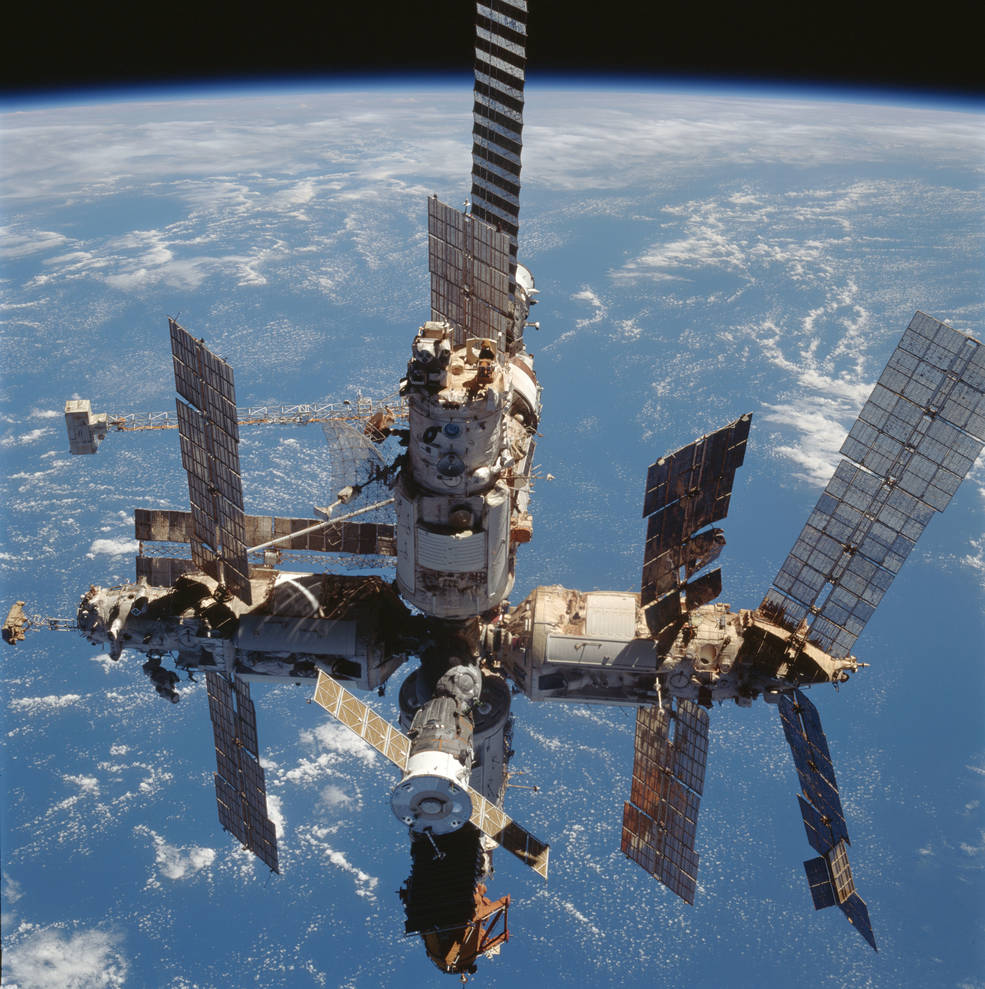
Mir
1986–2001
Expected to operate for about five years at launch, the station lasted 15 years and received extensions and maintenance.
Longevity depends on both evolving hardware and organised support.

Hubble
Since 1990 · 5 servicing missions
Astronauts replaced instruments and critical hardware, extending telescope life and improving its capabilities.
A retained platform can carry successive generations of equipment.
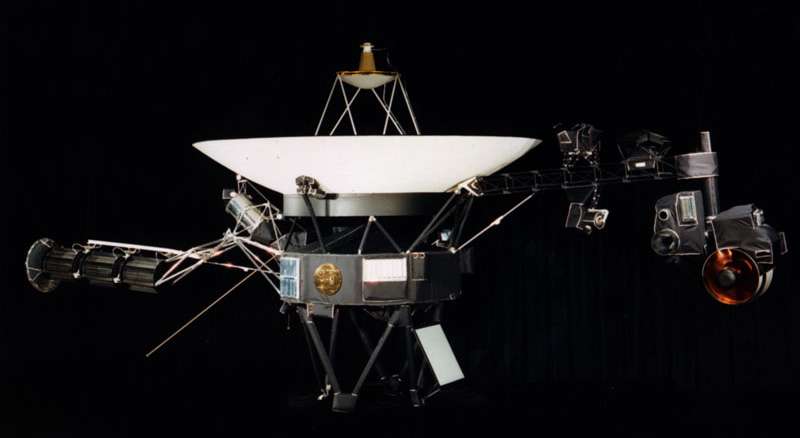
Voyager 1
1977 → 2025
In 2025 engineers revived backup thrusters considered unusable since 2004 by addressing heater power.
Revisiting a diagnosis can restore function. Separate component failure from power, heating or control failure.
Salyut 7
Recovery in 1985
A crew restored power, heating and systems in an unpowered, frozen station.
Restore operating conditions, then verify individual functions and suitability for continued use.
Tiangong-1
Primary mission and extension
The station continued working for roughly two additional years after its two-year primary programme.
Mission extension differs from remaining in orbit. Time after loss of function is not useful operating life.
Six mechanisms: support, replacement, upgrades, redundancy, recovery and changes to control. Ask of each case: which function survived, which intervention helped and which limits remained?
Aviation and rockets
Aviation: each machine has a history
Hours, cycles, inspections, repairs, diagnostic results and component histories belong to identified equipment. Reliability programmes inform maintenance changes. Mandatory life limits and safety requirements remain binding.
Reusable rockets: another operating cycle
The recovered first stage of Falcon 9 can fly again after checks and preparation. This example concerns the first stage; it does not make every rocket component reusable.
Scrapping an entire refrigeration installation after a replaceable component fails treats it like an expendable rocket. THOR designs subsequent maintenance and renewal cycles from the start. Industrial refrigeration is already repairable; our goal combines repairability, data, control and continuing funding.
Purdue · Falcon 9 booster landing team
“My father's car never broke down because it was always repaired before it broke.” A family recollection from Alex Ananin.
Planned maintenance cost slightly more, while the car remained ready to use. This illustrates preventive care, without statistically guaranteeing zero failures. Diagnosis, parts, skills and a maintenance window must be ready in advance.
System layers
Separate refrigeration hardware by ageing rate. Frequent replacement fits specified consumables. Decisions for other parts depend on diagnostics, maintenance requirements and failure consequences. There is no universal calendar for every installation.
Educational vapour-compression diagram. Interpret pressure, temperature, current and operating conditions together.
| Layer | Examples | Support rule |
|---|---|---|
| Foundation | Frame, supports, casing, chamber | Inspect, protect and restore. Retain while suitability is demonstrated. |
| Thermal envelope | Insulation, doors, seals | Monitor cooling losses and damage. Replace seals and restore affected areas as needed. |
| Refrigerant circuit | Pipes, valves, heat exchangers | Monitor tightness, corrosion and fouling. Repair sections and replace components. |
| Mechanics | Compressors, pumps, fans | Track operating hours, starts, vibration and temperature; follow manufacturer requirements. |
| Electrical systems | Contactors, drives, power supplies, boards | Check condition and operating environment. Provide replaceable blocks and future compatibility. |
| Consumables | Filters, seals, specified lubricants | Maintain and replace according to requirements and condition. |
| Control and knowledge | Sensors, software, settings, records | Validate measurements; preserve history, documentation and local operation. |
Modularity needs available compatible replacements, intelligible interfaces, documentation and diagnostic access. A removable block with no replacement leaves the system dependent on a single supplier. Manufacturers, software and technologies may change over a century.
- Refrigeration: retain a suitable foundation while renewing working modules and control.
- Ovens: assess casing, insulation, heaters, fans, sensors and power control separately.
- Lighting: assess housing, optics, light module, driver and control separately. A new lighting scene can reuse suitable components.
Life management
Remaining useful life is an uncertain estimate under stated operating conditions. Reassess after load changes, repairs or new evidence. Distinguish storage life, operating life, overhaul interval and statistical mean time between failures.
- Mandatory limit reached: remove the component from service under the applicable procedure.
- Signs of deterioration: confirm the diagnosis and schedule intervention with sufficient lead time.
- Healthy component and adequate evidence: continue within allowable conditions and monitor.
- Insufficient evidence: arrange inspection; do not claim an exact remaining lifetime.
- New technology: compare retention, repair and upgrades at equal useful performance.
Economics
Who benefits when a device dies?
The market-incentive question has documented history. Formed in 1924, the Phoebus cartel coordinated bulb life around 1,000 hours, monitored tests and applied penalties for deviations, including excessive life. The historical study draws on archival records.
Buyers and sellers may have different interests in product longevity. Early failure alone does not prove intent. Deliberate life restriction requires case-specific documents, design analysis and failure data. Check repair, parts and software support availability.
Challenge premature-replacement marketing by making continued use accessible, verifiable and attractive. Support providers should benefit from years of useful operation.
IEEE Spectrum · Phoebus archival history
A bulb installed in 1901
Livermore's Centennial Bulb is an exceptional longevity case. Interruptions included about a week in 1937 and at least 9.5 hours in 2013. It now uses about 4 W. Lighting comparisons must also consider output and efficiency.
Designed for century-long storage
Anduril founder Palmer Luckey described the ModRetro Chromatic concept: take it out after 100 years, insert batteries and switch on. This is a design aspiration involving storage. A century of continuous operation is unproven; the specific video showing a board has not been identified.
Depreciation and continuing life
Separate physical wear, accounting allocation of cost and actual renewal funding. Depreciation alone does not establish a cash reserve. Future replacements need an explicit funding mechanism.
Acquire once and provide for continuing life: the initial investment creates the platform; subsequent useful operation supports care and renewal. Recurring costs remain. The goal is predictable full cost and fewer premature write-offs.
Rolls-Royce TotalCare links payment to engine flying hours and includes predictive maintenance and repair. In refrigeration the analogous incentive links support income to useful cooling availability.
Compare alternatives at equal useful cooling, temperature and availability. Include energy, service, repair, downtime, replacement and residual value. Keep energy savings and avoided damage separate and avoid double counting.
Educational model with synthetic inputs. Equal useful performance and energy cost; constant prices, 0% discount rate. Investment analysis additionally requires inflation, discounting, taxes, changes in energy use and residual value.
A negative difference means the modular scenario costs more.
Replacement exactly at the horizon is excluded: its service belongs to the next period. Planned renewal may require downtime.
Exercises
1. Voyager: diagnosis or verdict?
A thruster is considered failed. Telemetry suggests no heating. What should be checked before concluding mechanical destruction?
Worked reasoning
Validate measurements, power and heater circuits, commands and operating limits. Develop competing hypotheses. Verify restored function through observations. The analogy does not authorise starting hazardous machinery.
2. Disassemble the refrigerator
The chamber foundation is sound, the door seal damaged, the heat exchanger dirty and the controller unsupported. Make four separate decisions.
Worked reasoning
Foundation: confirm suitability. Seal: replace. Exchanger: service and verify. Controller: assess compatible replacement while preserving protection. Overall age alone does not justify scrapping every part.
3. Repair in advance
Fan vibration is rising. A spare takes 14 days; the maintenance window is in seven. There is no reliable time-to-failure prediction. What should the agent do?
Worked reasoning
Confirm the symptom, urgency and limits; assess redundancy and alternative supply. Agree a safe action. Delivery time cannot be treated as an allowable operating period.
4. A century in the model
Use the default calculator: 100 years, installation 10 million, whole replacement every 15 years, service 0.2 million/year; modular support 0.35 million/year and 2 million renewal every ten years. Explain the result.
Worked reasoning
Whole replacement: 7 × 10 + 100 × 0.2 = 90 million. Modular: 10 + 100 × 0.35 + 9 × 2 = 63 million. The synthetic difference is 27 million. It proves neither real savings nor physical century-long suitability.
5. Test a striking claim
Do the century bulb and Chromatic statement show that every board and bulb will operate for 100 years?
Worked reasoning
No. An exceptional observed case and a design aspiration have different evidence strength. Specific operating conditions, performance, ageing mechanisms and product data are required.
6. Hubble for lighting and ovens
Propose upgrades to a luminaire and oven while retaining suitable foundations. Which interfaces and checks matter?
Worked reasoning
Lighting: compatibility of module, driver, optics and thermal conditions. Oven: heaters, sensors, control and protection. Verify function, electrical parameters and thermal conditions after work.
7. Passport of a century system
Write a passport for an installation that must survive a supplier change and three controller generations.
Worked reasoning
Identifiers and inventory; diagrams and interfaces; operating and intervention history; limits; compatible replacements; suitability criteria; renewal funding; documentation custody; decision owners; verification and transfer of knowledge to the next operator.
Agent protocol
The agent maintains useful function and supports every intervention with evidence. Separate authority controls access to physical equipment. This learning material grants no permission for physical actions.
- Input: system and component IDs, function, regime, history, observations, mandatory limits, replacement cost and availability.
- Output: condition, evidence quality, remaining-life range or reason it cannot be estimated, action options, timing, responsible party and verification method.
- Acceptance: limits respected; function maintained; full costs compared; uncertainty explicit; post-intervention evidence obtained.
- Prohibited: promising immortal parts; presenting synthetic numbers as facts; confusing storage and operation; counting years without useful function; overriding mandatory limits with forecasts; double counting benefits.
Sources
Verified sources for factual cases. Engineering transfer and the century goal are the course's proposed framework.
- NASA · ISS facts
- NASA · Mir retrospective
- NASA · Mir Hardware Heritage
- NASA · Hubble servicing
- NASA/JPL · Voyager thruster recovery, 2025
- ESA · Tiangong-1 FAQ
- FAA · AC 120-17B
- Purdue · Falcon 9 booster landing team
- IEEE Spectrum · Phoebus archival history
- Centennial Bulb · facts
- WIRED · Palmer Luckey / Chromatic
- Rolls-Royce · TotalCare